Lithium Batteries: Driving the Electrification of Mobile Machinery
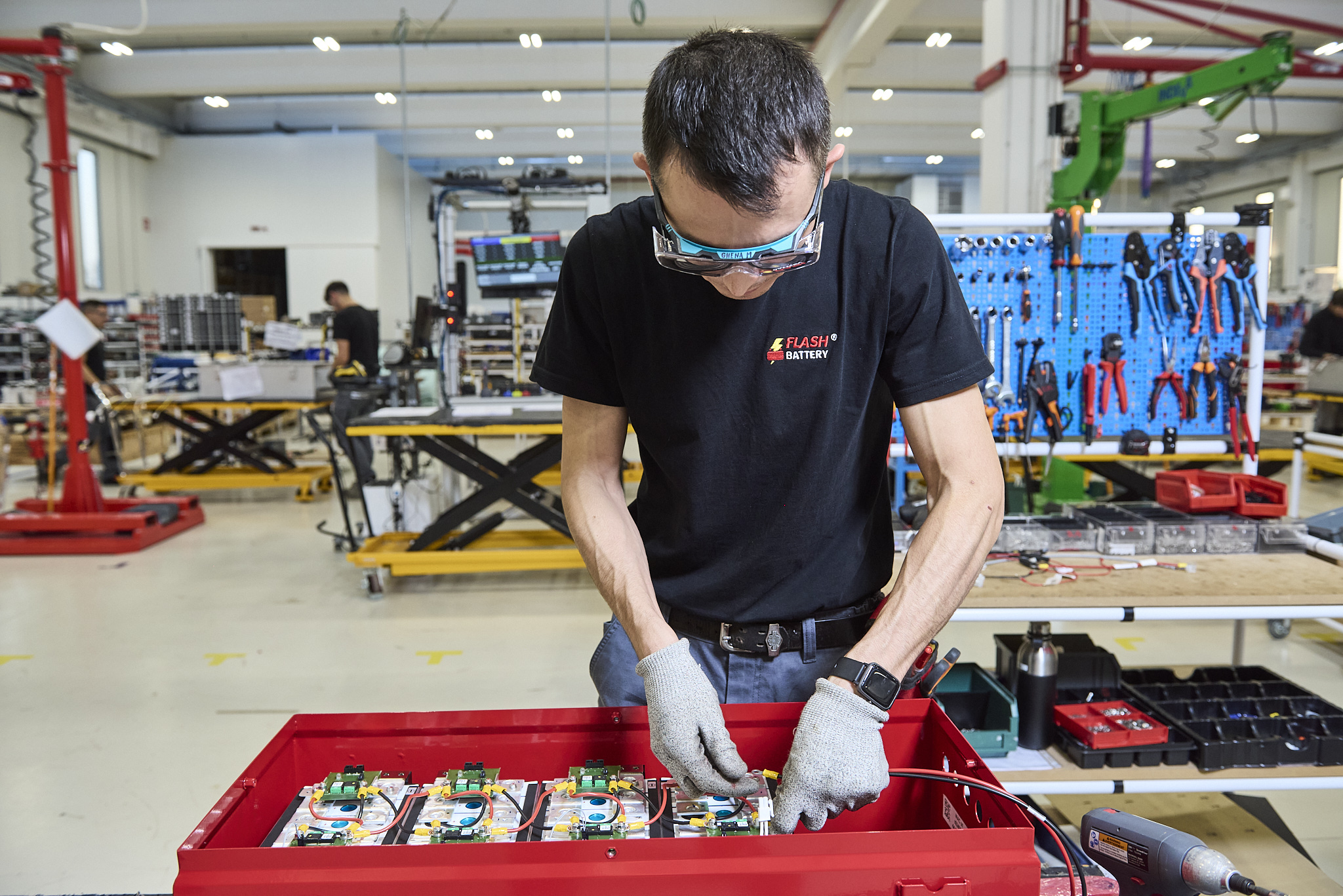
This is the first article in a new ETP series on lithium batteries for mobile machinery, developed in collaboration with Flash Battery. The series will guide machine manufacturers through the technical, financial and regulatory decisions involved in electrification.

Electrification is accelerating, while the EU Battery Regulation is introducing new requirements throughout the battery lifecycle. This makes battery technology more relevant than ever for machine manufacturers. Through our new partnership with Flash Battery, we can give Nordic OEMs access to advanced battery technology developed and manufactured in Europe, combined with ETP’s expertise in mobile machinery and system integration. Our role is to make a complex transition easier and help customers move faster from concept to serial production.
Christer SigurdCEO, ETP
Why the battery decision shapes the entire machine
Electrification can make mobile machinery more efficient, responsive and easier to maintain. Achieving those benefits, however, requires more than replacing a combustion engine with an electric motor and adding a battery. The complete system must be designed around the machine’s operating conditions.
For an OEM, choosing a battery starts with understanding how the machine will actually be used. How long must it operate between charges? How high are the power peaks? Are there natural opportunities to recharge during the working day? This analysis is also the starting point for Flash Battery when developing a custom battery system. Duty cycle and real operating conditions are analysed to define the most suitable battery configuration for each specific application. Temperature, available installation space and weight limits also shape the solution. Together, these factors determine how much energy and power the battery must deliver – without making it larger, heavier or more expensive than necessary.
This is where lithium-ion technology offers important advantages over conventional lead-acid batteries. More energy can be stored at a lower weight, while faster and partial charging creates greater flexibility in daily operation. For machinery with intensive duty cycles, lithium iron phosphate, or LFP, is often particularly suitable. It combines good thermal stability with long service life and consistent performance – qualities that support both safe operation and predictable availability over time.
A battery performs as part of a system
Battery capacity alone does not determine machine performance. The battery must operate and communicate correctly with the electric motor, inverter, charger, vehicle control system and thermal management system. Voltage levels, current limits, communication and protection strategies all need to be aligned. Incorrect sizing can result in unnecessary weight and cost, limited performance or insufficient operating time.
The battery itself is therefore a technology system, not simply an energy storage component. Flash Battery develops its custom lithium battery systems by combining application-specific battery design with proprietary electronics and BMS technology, ensuring that the battery can be correctly integrated and communicate with the machine’s other systems.
This is where an experienced system integrator makes a decisive difference. Instead of leaving the OEM to coordinate several suppliers and manage each technical interface separately, the system integrator takes a complete view of the machine. Components can be selected, sized and tested as one system, allowing potential problems to be identified earlier. This reduces development risk, shortens testing and validation cycles and helps the manufacturer bring the machine to market faster.

The best battery is not necessarily the largest one. It is the battery that has been dimensioned for the machine’s duty cycle and integrated correctly with the rest of the system. By bringing application knowledge, component selection, software and validation together, we can make the development process considerably more straightforward for the machine manufacturer.
Emil WesterlindR&D Manager
Early collaboration is critical. Decisions made during the concept phase affect packaging, charging, cooling, software and functional safety, as well as the route from prototype to series production. Involving ETP and Flash Battery from the outset brings together system integration expertise and battery technology know-how, allowing the OEM to address the complete solution in a coordinated way – simplifying the project and shortening the path to a validated machine.
A lifecycle perspective is becoming essential
Technical performance is only part of the decision. OEMs must also consider energy consumption, charging infrastructure, maintenance, service life and total cost of ownership. The EU Battery Regulation also places greater emphasis on areas such as carbon footprint, traceability, due diligence, recycling and the digital battery passport. Battery choices made today must therefore support both reliable long-term operation and future compliance.
The following articles will examine lithium compared with lead-acid technology, the EU Battery Regulation, system integration, total cost of ownership and the safe transport of lithium batteries. Together, they will give machine manufacturers a practical technical basis for making better electrification decisions.
About Flash Battery
Flash Battery is a leading European manufacturer of custom lithium battery systems for industrial machinery and electric vehicles, with more than a decade of experience in developing solutions. The company develops its battery technology, electronics and BMS expertise in-house, working alongside OEMs to design solutions tailored to the specific requirements of each application.
Readers who would like to explore the subject further can already access Flash Battery’s extensive Lithium Insights library, which covers battery technology, safety, charging, system design and developments within industrial electrification.
Get in touch with ETP
With nearly 50 years of experience developing solutions for mobile machinery, we understand what it takes to succeed. Partnering with ETP makes the transition easier – and the solution better. Contact or follow us to find out more.

Contact & Staff

Subscribe to our Newsletter
